
Knee Pain When Running? Here's How to Fix it
Knee pain when running is a grating (literally) experience.
We see plenty of running injuries at NT Sports Therapy Manchester. In many cases, the cause is runner’s knee. Despite the name, runner’s knee doesn’t just affect runners. The knee is usually the victim, not the culprit.
Understanding what’s actually causing the pain is the key to recovery and prevention.
Let’s break it down.
Symptoms of Runner's Knee
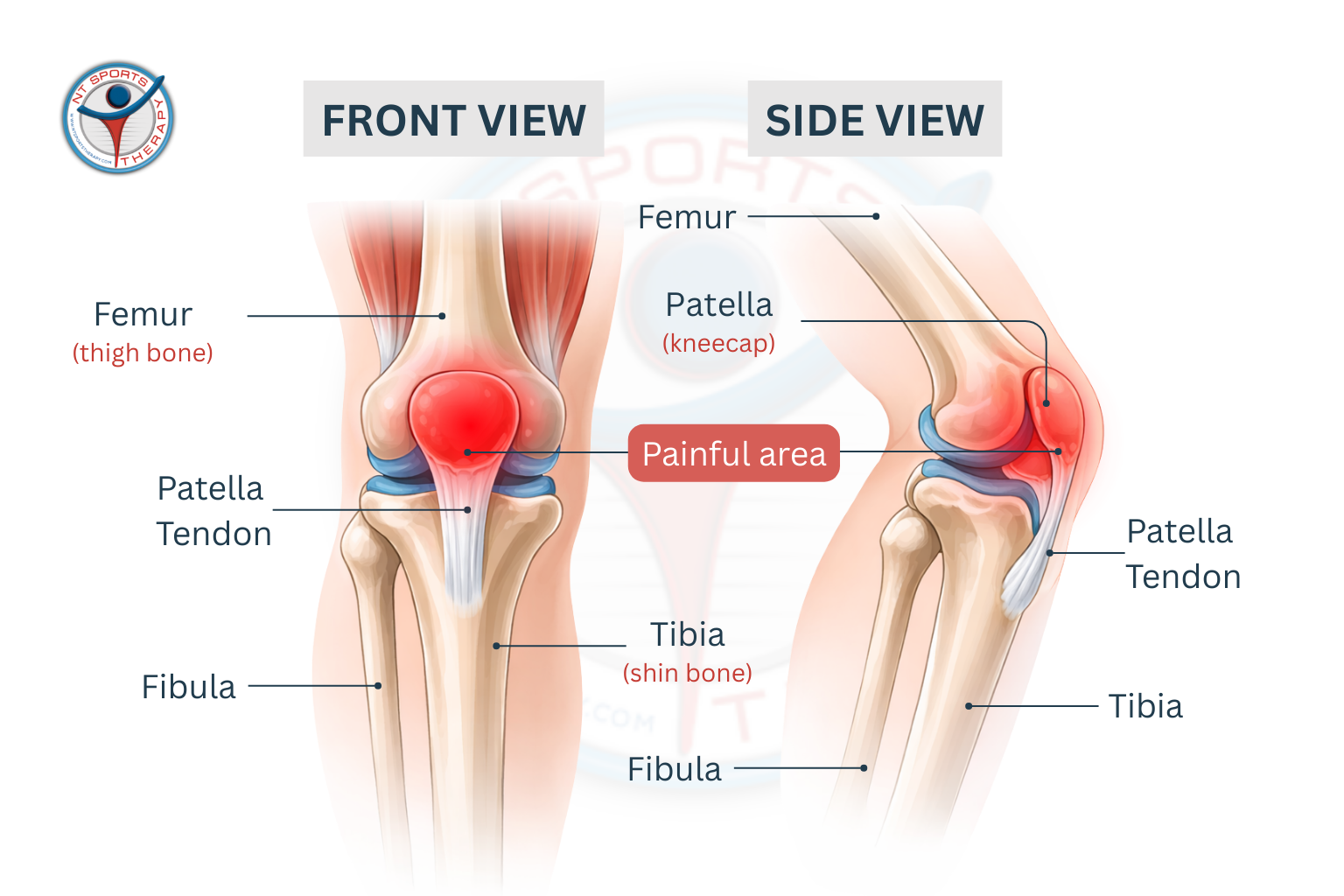
Aching pain behind the kneecap is the biggest indicator of runner’s knee.
Other common symptoms include:
- Discomfort that worsens during or after running
- Pain in the knee when climbing stairs or walking downhill
- Aggravation when squatting or lunging
- Increased discomfort after sitting for long periods
- Grinding or clicking sensations
- Swelling or tenderness around the knee
These symptoms appear as a result of how your body is moving and coping with load. So, what exactly is runner’s knee?
What Causes Runner's Knee?
Runner’s knee (patellofemoral pain syndrome, PFPS) develops when the kneecap fails to move smoothly over the femur.
Repetitive movement irritates the joint, leading to knee pain when running.
What causes it?
- Overuse: the primary cause. Simply too much running, Mileage, intensity, hills
- Weak hip and glute muscles: unstable hip mobility can cause the knee to drift inwards, increasing pressure behind the kneecap
- Quad fatigue or tightness: tired quadriceps can make the patella fall out of place
- Foot biomechanics: flat feet or high arches can impact load distribution
- Previous injury history: past knee issues make it more susceptible to injury
Treating runner’s knee purely at the site of pain isn’t enough. If the above aren’t addressed, symptoms may return.
How We Diagnose Runner’s Knee
The first step is confirming whether the issue is truly runner’s knee or another form of knee pathology.
Our diagnosis is a process of elimination…
We assess three core areas:
- Movement analysis: how your gait and knee alignment behave under load
- Strength testing: Identifying any weakness in the glutes and quadriceps
- Mobility assessment: checking restrictions that affect joint positioning.
We also use special tests, such as Clarke’s test, to rule out meniscal or ligament involvement to ensure it’s not something more serious!
Treatment and Recovery Time
At NT Sports Therapy Manchester, our goal is to improve mobility, rebuild strength and get you back to sport, pain-free.
The body works as a connected system. There’s usually a wider imbalance contributing to pain. That’s why we take a multidisciplinary approach to treating runner’s knee.
What treatment might entail:
Rebuilding strength through the glutes and hip stabilisers, improving patella control and reducing joint stress. Load is reintroduced in phases to safely increase capacity.
Myofascial release, targeted soft tissue work and taping. Where appropriate, acupuncture can help reduce irritation and support effective movement retraining.
In some cases, we look beyond the joint itself. Bloodwork can highlight underlying issues, while counselling can help some athletes manage the mental side of reduced training and pain management.
Supporting Recovery at Home
There are a few things you can do at home to aid runner’s knee recovery.
Obviously, avoid marathon training or hiking up Mount Snowdon!
- Reduce irritation: lower mileage, avoid downhill routes and deep knee bends, and, like most injuries, have ice packs at the ready
- Build strength: exercises like glute bridges, clamshells and side-lying leg raises can improve stability and support patella tracking
- Gradual return: start with flat routes and shorter distances. Increase weekly mileage gradually (around 5–10%)
…and of course, nourishing your body is incredibly important. Good sleep, adequate protein intake, hydration, and stress management contribute to a smooth and speedy recovery.
Take Control of Your Recovery
Don’t let a manageable injury turn into a long-term setback.
Book your free consultation at NT Sports Therapy Manchester, and let’s identify what’s causing your knee pain when running.
Meet the team and see how we can help you train smarter, recover stronger and become the healthiest version of yourself.