
How Does Sleep Affect Pain? The Link Between Sleep and Pain Sensitivity
Ever noticed that pain or old injuries flare up after a bad night’s sleep? It actually is in your head (and in your body too!)
A 2026 Oxford-led study reports that disturbed sleep contributes to persistent pain. Total sleep deprivation has been shown to increase pain sensitivity and impair the body’s normal pain-modulating processes.
It’s a vicious and very irritating cycle. Pain keeps you awake, but you need sleep to manage the pain.
So, how does sleep affect pain? Let’s explore the science behind this cycle and, most importantly, how to solve this cyclical problem.
Why does poor sleep affect pain sensitivity?
Poor sleep affects how the nervous system processes pain.
A recent Harvard study found a 120% increase in activity in the somatosensory cortex (the brain region that interprets pain).
Sleep loss stresses the body, increasing sympathetic activity and reducing parasympathetic influence. This heightened state naturally clings onto signals of pain and threat.
With reduced thresholds, stimuli can be experienced as more painful than they would after restorative sleep. Tolerance to physical stress is reduced and several regions of the brain are on high alert for discomfort (see diagram).
This sequence heightens pain perception even when tissue damage itself has not increased.
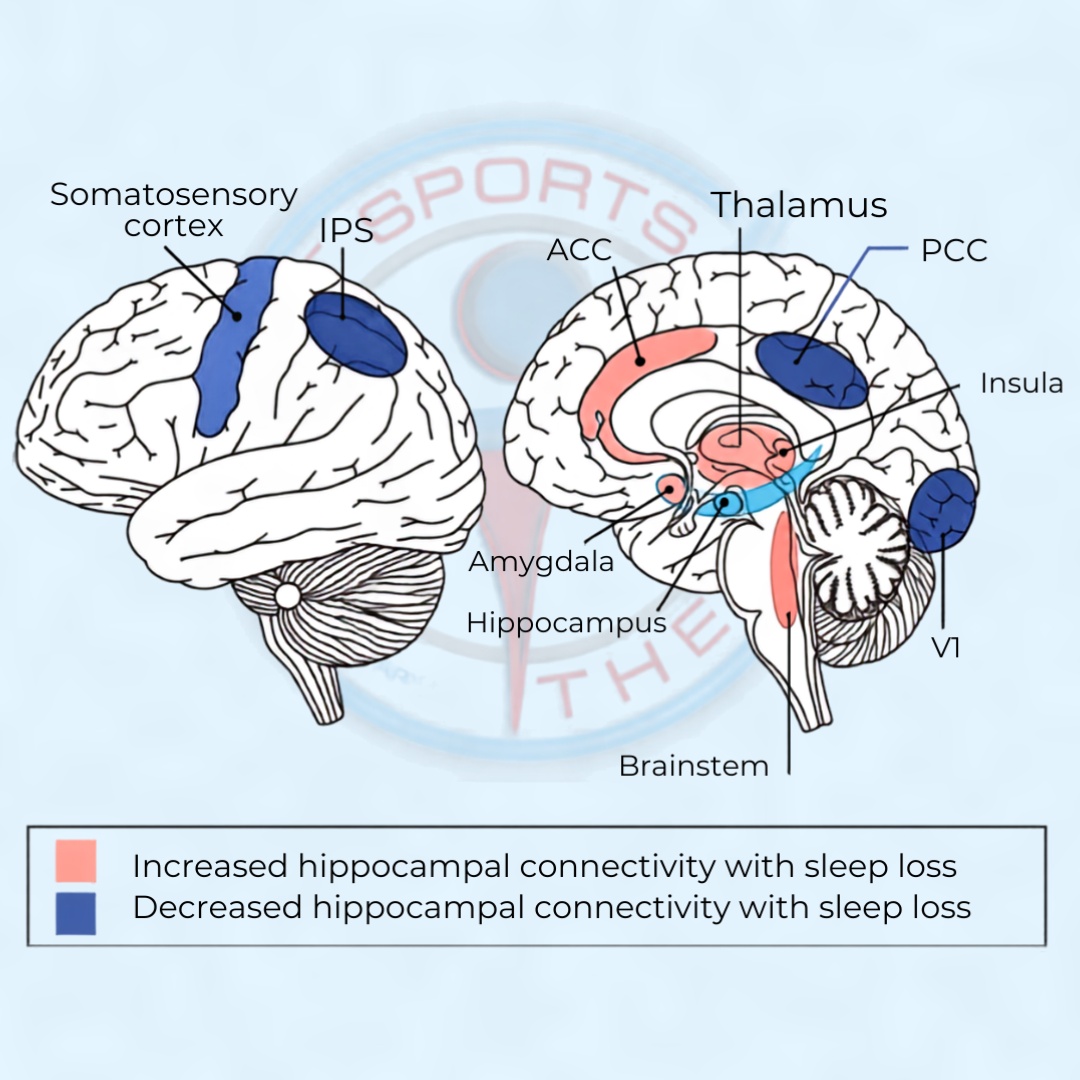
Index table | |
IPS | Intraparietal Sulcus |
PCC | Posterior Cingulate Cortex |
ACC | Anterior Cingulate Cortex |
V1 | Primary Visual Cortex |
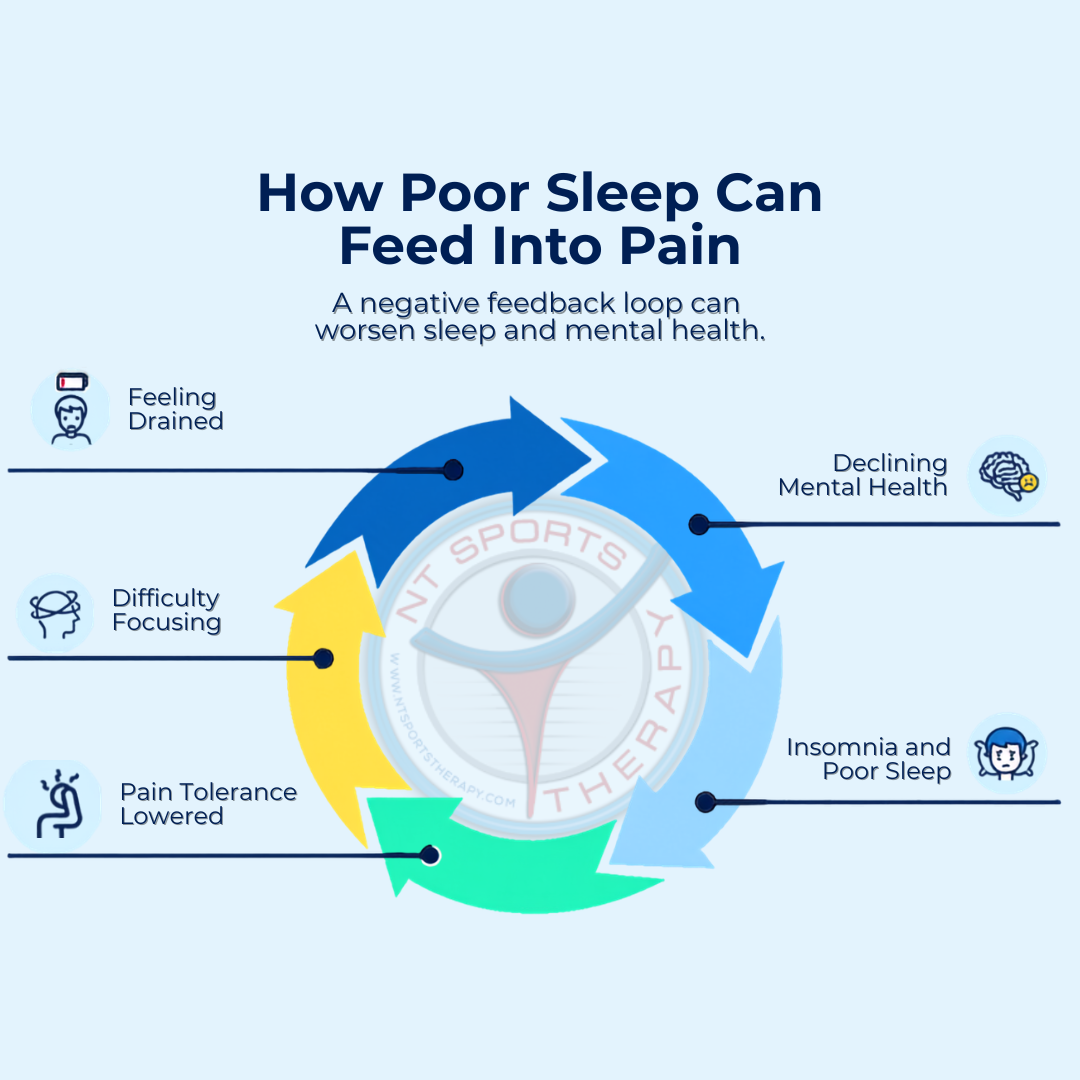
The pain, sleep and mental health cycle
Pain can disrupt sleep, and the lack of sleep worsens pain. This creates a bidirectional cycle.
Your brain is designed to prioritise potential threats, even during sleep. Persistent pain increases arousal and interrupts normal sleep patterns, such as deep sleep and REM, which are very important and restorative sleep states.
Pain is incredibly stressful and consuming. It can increase anxiety, low mood and hypervigilance. Those states can then increase attention to bodily sensations and keep the nervous system in an aroused state, which makes both sleep and pain regulation harder.
Poor sleep can increase inflammatory signalling in the body, while fatigue often leads to less movement and exercise. Over time, this can contribute to greater stiffness, persistent discomfort and a decline in mental wellbeing.
How does sleep affect performance and recovery?
Pain and sleep deprivation show up not only in how sore your body feels, but also in how well you train and recover afterwards:
Performance:
- Decision-making: fatigue makes it harder to process information and reduces mental clarity
- Focus and concentration: attention can drift, particularly during longer or more technical sessions
- Coordination and motor control: movements become less precise and muscle groups suffer
- Strength and mobility: muscles might become stiff, inflamed and dehydrated
- Endurance and perceived effort: exercise can feel harder than it normally would
Recovery:
- Tissue repair: the hormonal and cellular processes involved in repairing muscles is impacted
- Training adaptation: your body needs adequate recovery to become stronger or more resilient over time
- Inflammation regulation: poor sleep disrupts normal inflammatory regulation, contributing to increased soreness and slower recovery
- Rehabilitation progress: repeatedly poor sleep can make recovery feel harder by combining fatigue, greater pain sensitivity and reduced capacity to train or complete rehabilitation exercises
Recovery doesn’t begin and end with what you do in the gym or treatment room. Sleep plays a leading role in how your body repairs, adapts and regulates pain.
How can we help?
At NT Sports Therapy, we look at you as a whole picture. Understanding how sleep affects pain is an important part of looking at recovery as a whole.
Depending on the cause of your symptoms, we can build a tailored plan that helps reduce pain, improve recovery and support better sleep.
That might include:
- Sports massage to ease muscular tension and soreness
- Myofascial release to reduce restrictions and improve comfort and movement
- Reflexology to support relaxation and help the body shift into a calmer state
- Bloodwork and wellbeing checks where useful, to explore wider factors that may be affecting recovery
- Pilates to build strength, control and a stronger mind-body connection
We invite you to book a free consultation to have a chat about the best combination of support for you.
Or contact us on:
Email: info@ntsportstherapy.com
Phone: 0161 759 0001